
Pest control Kew
Pest control in Kew, heritage homes, flying foxes, and the Yarra River corridor
Kew's Victorian, Edwardian, and Federation mansions many now worth $2–5 million were built before termite barriers existed. Yarra Bend Park (260 hectares, the largest natural bushland in inner Melbourne) sits within the suburb with a confirmed flying fox colony. The Yarra River is the city's most active rodent corridor. Multi Pest Control services all of Kew 3101.

Tell us a few details and our Melbourne team will get back to you quickly with the right solution.

Kew 3101
Victorian & Edwardian heritage home specialists
Free Phone Consultations
Flying fox colony, Yarra Bend Park
24,499
residents (2021 Census)
$2.81M
median house price, highest in this guide
260 ha
Yarra Bend Park, inner Melbourne's largest bushland
37 parks
18% of 10.5 km² suburb area
Grand Italianate mansions, stone cottages, timber subfloor
Victorian (1850s–1900)
Highest termite risk
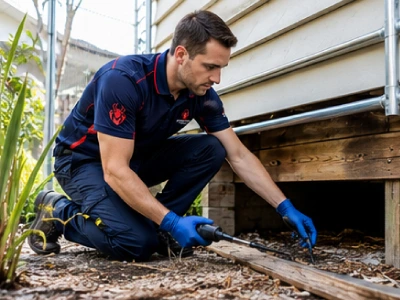
Original sandstone and brick construction on timber floors. No chemical treatment built 150+ years ago. Homes like Raheen (Studley Park Road) and Studley House (1857) represent this era. Subfloor crawl spaces with century old moisture accumulation are at extreme termite risk adjacent to Yarra Bend Park. Annual inspection is critical.
Sackville Ward mansions, Federation cottages, red brick
Edwardian & Federation (1900–1920)
Very high termite risk
The Sackville Ward described by Expedia as "some gorgeous examples of Edwardian and Federation architecture" contains Kew's finest Federation-era homes. Original timber subfloor on brick stumps, no barrier treatment, wide verandahs, and large established gardens adjacent to the Yarra Bend bushland. The highest-value homes in the suburb carry the highest pest risk.
Californian bungalows, Spanish Mission, art deco
Interwar (1920–1945)
Elevated termite risk
Brick veneer on timber subfloor any chemical treatment from this era has expired. Deep subfloor crawl spaces and large established gardens adjacent to Yarra River escarpment. Annual inspection recommended. Heritage overlays in many streets require careful inspection approach to avoid damage to original building fabric.
Townhouses, apartments, contemporary homes
Post 1945 and modern
Managed risk
Slab construction lowers inherent termite risk. However, Willsmere Estate conversions (former Kew Asylum buildings from 1871) have heritage era structure surrounded by modern refits inspection approach must accommodate original fabric. New townhouses near Yarra Bend should have current barrier documentation.

🐀 Rats and mice
The Yarra River corridor running 12km through Yarra Bend Park on Kew's boundary is confirmed by pest control professionals as "one of Melbourne's most active rodent travel routes on the eastern side of the city." Rats move along the river reserve into residential streets through storm drains and garden corridors. Autumn leaf fall creates ground cover approaching homes. Winter drives rats from the river into the heated roof cavities of Kew's heritage homes through ageing eave linings and deteriorating tile mortar.
Rodent control →
🪳 German cockroaches
Primarily a commercial pest issue in Kew the Kew Junction café and restaurant precinct on High Street and Cotham Road, confirmed by Domain as offering "popular restaurants and cafes serving up plenty of different cuisines," and the Kew Post Office (1888) precinct near the war cenotaph (1925) concentrates food businesses that require HACCP-compliant pest programs for City of Boroondara council compliance. Kew Junction's laneway and service lane bin enclosures are the primary cockroach pressure zone.
Cockroach control →
🕷️ Redback and white tail spiders
Common throughout Kew's established gardens particularly under outdoor furniture, in dry rockeries, and in the subfloor spaces of heritage homes adjacent to Yarra Bend and Studley Park. The Boroondara fauna inventory confirms spiders as resident in leafy residential areas across the municipality. Kew's large allotments with established garden features provide far more spider harborage than inner-city suburbs with small gardens.
Spider control →
🦇 Grey headed flying foxes and bat mites
Kew is unique in this regional guide Domain confirms a flying fox colony at Yarra Bend Park with "a walking track and viewing platform accessed from the Bellbird Picnic Area." Grey-headed flying foxes are protected under the Wildlife Act 1975 (Vic) they cannot be harmed or removed. Their colony creates bat mite pressure for Kew properties adjacent to Yarra Bend bushland when mites migrate from roost sites into living spaces. Properties on Studley Park Road, Yarra Boulevard, and the Yarra Bend escarpment streets are most affected.
Wildlife exclusion →
🐝 European wasps
Nesting underground and in roof voids adjacent to all 37 of Kew's parks and the extensive Yarra Bend and Studley Park bushland. European wasps are confirmed by pest professionals as "drawn to backyard barbecues" in Kew the suburb's outdoor entertaining culture, large gardens, and proximity to parkland all create elevated wasp pressure. Peak activity February to April. Same-day nest removal available.
Wasp removal →
🐛 Termites (Coptotermes acinaciformis)
Kew has one of Melbourne's highest concentrations of original Victorian, Edwardian, and Federation-era timber subfloor homes built before chemical barriers existed. Yarra Bend Park's 260 hectares of River Red Gums and native bushland provides confirmed Coptotermes acinaciformis nesting habitat directly adjacent to residential streets. Pest professionals confirm "spring termite swarms are common in Kew, particularly on properties with mature trees and undisturbed garden beds close to the house." Annual AS 3660.2 inspections are essential for all pre-1980 Kew properties.
Termite inspection →
🦝 Common brushtail and ringtail possums
Extremely abundant from Yarra Bend Park (260 ha, 1.5 million visitors per year) and Studley Park the Boroondara Council's own indigenous fauna inventory confirms possums as resident wildlife throughout the leafy residential areas. Kew's large allotments with mature European and native trees overhanging rooflines give possums direct roof access. Heritage homes with original slate tiles and Marseilles pattern terracotta tiles are particularly susceptible as the mortar deteriorates over decades..
Possum removal →
🦟 Silverfish
Extremely common in Kew's heritage homes and one of the suburb's most financially damaging pests. Kew's affluent, educated demographic maintains large collections of rare books, first editions, historic documents, fine textiles, and vintage wallpaper all prime silverfish food sources. Original Victorian-era homes with timber subfloors, damp bathrooms with original tile grout, and library rooms have the worst silverfish activity of any suburb type in Melbourne. Protecting Kew's heritage interiors from silverfish requires specific treatment for original building materials.
Silverfish control →

Tell us a few details and our Melbourne team will get back to you quickly with the right solution.